

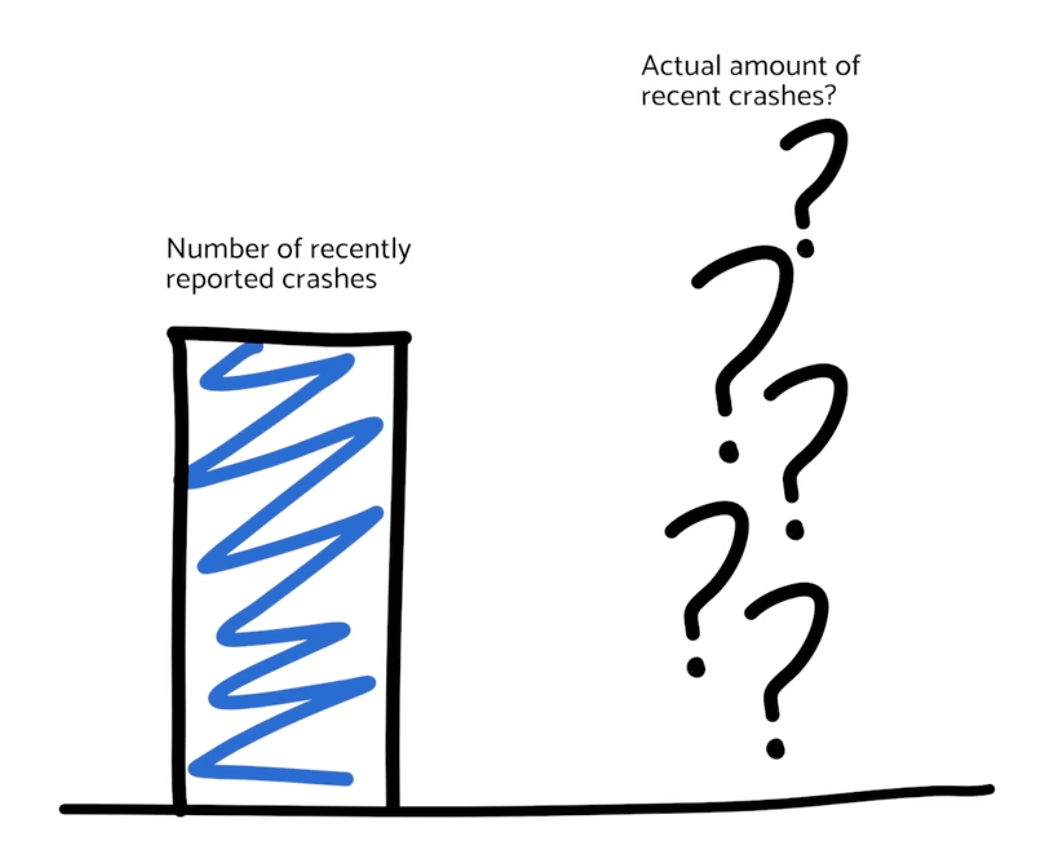
By the time a user emails you about a crash, three bad things have already happened: it shipped, it spread, and whatever caused it is now buried under a week of "it just stopped working." User reports feel like feedback. Mostly they're a lagging indicator of damage already done.
Getting signal from your users matters. But if your plan for catching critical defects is users will tell us, you've outsourced your most important alerting system to the people least equipped to run it.
Here's where it breaks down.
Users can't give you the data that fixes the bug
Ask a user what happened and you'll get a feeling: "it froze," "it crashed on the loading screen," "your game is broken." All true. None of it tells you which line of code died, what the call stack looked like, or what state the app was in when it happened.
The fastest way to fix a crash is to see it the way a debugger sees it - the exact frame, the exact thread, the exact line. No user has ever sent you that. They can't. The information that matters never makes it into the report.
You find out last, not first
Bugs ship. That's not a process failure, it's the nature of software complex enough to be worth making. The question is whether you hear about a regression in minutes or in days.
User reports put you at the end of the line. By the time enough people are annoyed enough to write in, the crash has already rolled out to your whole install base. The window where you could have caught it, patched it, and shipped a fix before most players ever noticed - that window is gone.
You can't tell how bad it actually is
Report volume measures how many people complain, not how often something breaks. Those are wildly different numbers. The crash that takes down 5% of sessions but annoys quiet players looks smaller than the cosmetic glitch that lights up your forum. You end up prioritizing by who's loudest instead of what's worst.
You can't triage what you can't measure. And users hand you a measurement of their patience, not your stability.
What actually works
Capture crashes automatically, at the moment they happen, with the data attached.
That's all crash reporting is. Instead of waiting for a user to translate a stack trace into frustration and email it to you, your app reports the crash itself - grouped with every other instance, symbolicated, and pointed at the line of code that caused it. You see a spike before your players turn into a support queue, and you fix the problem instead of decoding a description of it.
Thousands of teams use BugSplat to do exactly this, for hundreds of millions of their players. If you're still waiting on users to tell you something's wrong, you're finding out too late by design.